
Language is full of small phrases that look simple on the surface but carry a deeper meaning once you start digging into them. “Do Escritor” is one of those expressions that often confuses learners of Portuguese because it doesn’t translate in a very direct or obvious way. At first glance, it looks like just two small words, but together they carry a grammatical structure that is actually very important in understanding possession and meaning in Portuguese.
If you’ve ever seen this phrase in articles, book references, or online content, you might have paused and wondered what it really means. That curiosity is exactly what makes learning languages interesting, because behind every phrase there is a system, a logic, and a cultural way of expressing ideas that goes beyond direct translation.
Understanding the Meaning of “Do Escritor”
The basic translation and idea
The phrase “Do Escritor” comes from Portuguese grammar and is formed by combining two elements: “do” and “escritor.” In simple terms, it translates to “of the writer” in English. But that translation alone doesn’t fully explain how or why it is used in everyday language.
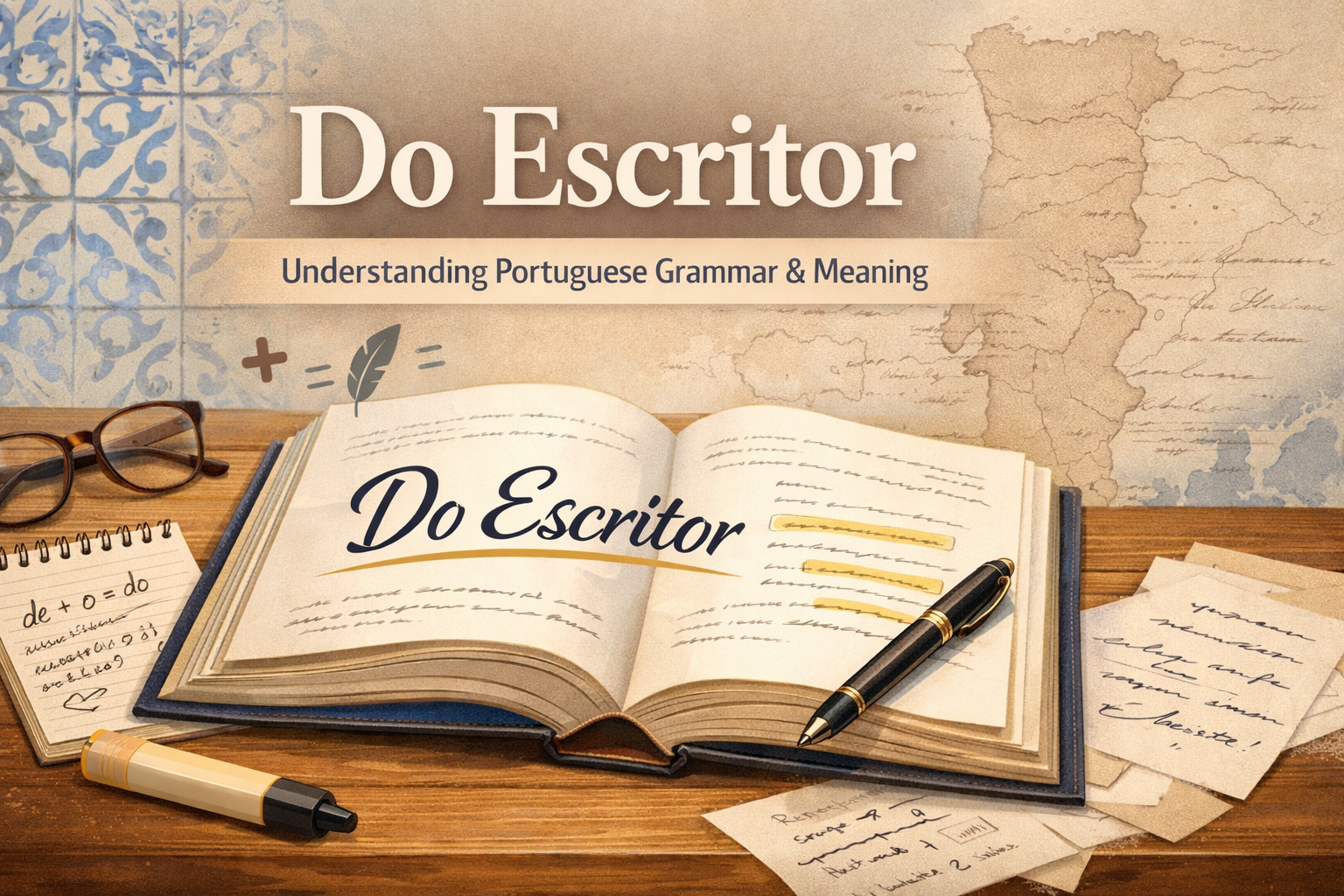
The word “escritor” means “writer,” and “do” is a contraction of “de” and “o,” which together express possession or relation. So when you put them together, the phrase is not just about a writer in general, but something that belongs to, is related to, or is connected with a writer. This is why literal translations sometimes feel incomplete without understanding the grammar behind them.
Why is this phrase more than just a translation?
What makes “Do Escritor” interesting is that it shows how Portuguese expresses relationships between words. Instead of using separate possessive words like in English, Portuguese often uses contractions that change the flow of meaning. This makes the language more compact but also slightly more complex for beginners.
When you see “Do Escritor,” it could refer to something belonging to a writer, such as a style, a book, a voice, or even a perspective. The phrase is flexible, and its meaning depends heavily on the context in which it appears. That is why learners often need more than a dictionary—they need exposure to real usage.
Grammar Behind “Do Escritor” in Portuguese
How “de” and “o” work together
To understand “Do Escritor,” you first need to understand how Portuguese handles prepositions and articles. The word “de” means “of” or “from,” while “o” is a masculine definite article meaning “the.” When they are combined, they form “do,” which simplifies pronunciation and writing.
This contraction is extremely common in Portuguese and appears in many everyday phrases. Instead of saying “de o escritor,” which sounds awkward and unnatural, native speakers always use “do escritor.” This small change is part of what makes Portuguese smooth and rhythmic in spoken form.
Possession and relationship in grammar
In English, possession is usually shown using apostrophes or the word “of,” but Portuguese relies heavily on these contractions. “Do Escritor” is not just a grammatical structure; it is a way of showing the connection between two ideas without needing extra words.
This structure is used constantly in literature, journalism, and academic writing. It helps create a flow where ideas connect naturally instead of feeling broken or separated. For learners, mastering this structure is a big step toward sounding more fluent and understanding real Portuguese texts.
Real Usage of “Do Escritor” in Everyday Language
“Do Escritor” is one of those phrases that you don’t just learn from a dictionary—you actually understand it when you see it in real use. In Portuguese writing, it often shows up in books, essays, and literary discussions where the focus is on the writer’s voice or creative identity. It helps describe something connected to the writer, like their perspective, style, or intention behind a piece of work.
In creative writing, this phrase becomes even more meaningful because it helps link ideas back to the person who created them. It is used to show ownership of thoughts and expression, making it clear that a certain narrative or opinion belongs to a specific writer. This is very common in literary analysis, where people try to understand how a writer’s mind works through their text.
In modern digital content, “Do Escritor” still holds value, especially in blogs, online articles, and educational writing. As more people learn Portuguese for global communication, this phrase appears in grammar explanations and content creation guides. It is also useful in marketing and startup writing, where understanding language structure helps create better content for Portuguese-speaking audiences.
Why “Do Escritor” Matters in Language Learning
Building a deeper understanding of Portuguese structure
Learning phrases like “Do Escritor” is not just about memorizing vocabulary. It is about understanding how Portuguese builds meaning through structure. Once you understand how contractions like “do” work, you start recognizing patterns everywhere in the language.
This makes reading easier and improves comprehension significantly. Instead of translating word by word, learners begin to understand ideas as complete units. That shift is what separates beginners from more advanced speakers.
Helping learners sound more natural
One of the biggest challenges in learning any language is sounding natural instead of robotic. Using phrases like “Do Escritor” correctly helps learners move closer to native-like expression. It teaches rhythm, flow, and structure at the same time.
When learners understand these small but important grammatical elements, their writing and speaking improve naturally. They stop thinking in their native language and start thinking in Portuguese, which is the real goal of language learning.
Common Confusion Around “Do Escritor”
Mistaking literal translation for meaning
Many learners make the mistake of translating “Do Escritor” too literally. They assume it always means something fixed, but in reality, its meaning changes depending on context. This leads to confusion and sometimes incorrect usage.
For example, without context, it might be unclear whether it refers to a book by a writer, a style of writing, or even a concept related to writing. This flexibility is what makes it both interesting and slightly challenging.
Overlooking grammatical contractions
Another common issue is ignoring contractions altogether. Beginners sometimes try to read “de o escritor” instead of recognizing it as “do escritor.” This slows down reading and creates unnecessary confusion.
Once learners get used to recognizing contractions, reading Portuguese becomes much smoother. It starts to feel more natural, and comprehension improves without conscious effort.
Practical Examples of “Do Escritor”
“Do Escritor” is often used in real sentences where you want to show something belongs to or is connected with a writer. In everyday use, it can describe a book, a writing style, or even the thought process behind a piece of work. It helps explain ideas like creativity and imagination by linking them directly to the writer who created them, which makes the meaning clearer and more personal.
In educational settings, this phrase is also very useful. Teachers and language learners use it when discussing how a writer’s identity is reflected in their writing. It helps connect abstract concepts like tone, message, and intention back to a real person. This makes learning literature and grammar easier because students can see how ideas are shaped by the writer behind them.
In cultural and creative contexts, “Do Escritor” goes beyond grammar rules and becomes part of how people appreciate writing itself. Writers are seen as creators of ideas, emotions, and stories, and this phrase highlights that connection. In literature, it helps show the relationship between the writer and their work, making it a simple but powerful way to understand artistic expression.
Learning Portuguese Through Real Phrases
Learning Portuguese becomes much easier when you stop focusing only on single words and start paying attention to full phrases. Words alone can feel confusing because they don’t always show the real meaning behind a sentence. But when you learn expressions like “Do Escritor,” you start seeing how the language actually works in real life. It’s like learning how people really speak instead of just memorizing dictionary meanings.
Real phrases also help you understand how context changes meaning. In Portuguese, the same word can feel slightly different depending on how it is used in a sentence. That’s why phrases are so powerful—they carry natural flow, emotion, and structure together. Once you get used to this style of learning, everything starts making more sense without forcing translation in your head.
This approach also makes reading and listening feel more natural. Instead of stopping at every word, your brain starts recognizing full chunks of meaning. Over time, this improves both speed and understanding, especially when you see grammar patterns repeating in different situations.
Why Phrases Matter More Than Isolated Words
When people first start learning Portuguese, they usually try to memorize long lists of vocabulary. At the beginning, it feels useful, but very quickly it becomes confusing. Words on their own don’t always explain how they are used in real communication, which is why learners often struggle to form sentences even after learning a lot of vocabulary.
Phrases like “Do Escritor” help solve this problem because they show structure in action. Instead of learning words separately, you see how they connect with each other. This connection teaches you grammar naturally without needing to memorize too many rules. It’s a more practical and real-world way of learning the language.
Over time, this method builds a stronger understanding because your brain starts remembering patterns instead of isolated meanings. That’s why learners who focus on phrases often progress faster and feel more confident when speaking or reading Portuguese content.
Building Confidence Through Context
Confidence in language learning doesn’t come from knowing every word—it comes from understanding meaning in real situations. When you recognize phrases like “Do Escritor,” you stop feeling lost every time you read something new. Instead, you start noticing familiar structures that guide you through the sentence.
Context plays a huge role here because it helps your brain predict meaning. Even if you don’t understand every word, you can still understand the message by recognizing patterns. This reduces hesitation and makes reading or listening much smoother over time.
As you continue learning this way, your confidence naturally grows. You stop translating in your head and start thinking in the language itself. That is the moment when Portuguese begins to feel less like a subject you study and more like a language you actually understand.
Conclusion
“Do Escritor” may look like a small and simple phrase, but it carries a deep grammatical and contextual meaning in Portuguese. It represents possession, connection, and identity all at once, showing how the language uses structure to express relationships between ideas.
For learners, understanding this phrase is more than just learning translation. It is about stepping into the way Portuguese speakers think and communicate. Once you understand it, you begin to see how small grammar elements shape the entire flow of the language, making communication more natural, expressive, and meaningful.
FAQs
How is “Do Escritor” used in real sentences?
“Do Escritor” is used to show connection or possession, such as describing a writer’s style, book, or creative ideas in Portuguese sentences.
Can “Do Escritor” describe a writing style?
Yes, it can be used to refer to the style or voice of a writer, helping explain how they express their ideas in texts.
Why do teachers use “Do Escritor” in explanations?
Teachers use it to connect writing concepts back to the author, making it easier for students to understand tone, meaning, and intention.
Is “Do Escritor” only used in grammar lessons?
No, it is also used in literature, creative writing, and cultural discussions about authors and their work.
What makes “Do Escritor” important in literature?
It highlights the relationship between a writer and their work, helping readers understand the artistic and expressive side of writing.