
Norway is a country where nature is not just scenery; it is part of everyday life. Deep forests, open mountains, and quiet rural roads all sit very close to human settlements, which naturally creates a unique and sometimes challenging relationship between people and wildlife. Managing this balance is not simple at all, especially when animals move freely across large natural landscapes without boundaries or restrictions. This close connection between humans and nature means that both must constantly adapt to each other, especially in rural and forest regions where wildlife activity is common and unpredictable.
This is where the system of Viltnemnda becomes extremely important. It works as a structured local framework that helps manage wildlife populations, handle unexpected conflicts, and ensure that both human safety and nature protection go hand in hand. Without such a system, it would be very difficult to maintain harmony between growing human activity and natural ecosystems. In this guide, we will explore how this system works in real life, why it was created, and how it continues to evolve with modern environmental challenges in a simple and practical way that anyone can understand.
What is Viltnemnda in Norway?
The system known as Viltnemnda is a local municipal wildlife committee structure that operates across different regions of Norway. Every municipality has its own committee, which is responsible for handling wildlife-related issues within that specific area. This makes the system highly localised, flexible, and very responsive to real-world situations.
This structure is important because wildlife behaviour is not the same everywhere. Animals in forest regions behave differently from those near coastal or urban areas. By giving responsibility to local authorities, decisions are made based on real environmental conditions instead of distant assumptions. This leads to better understanding and more accurate wildlife management.
The main idea behind this system is balance and sustainability. It is designed to protect wildlife populations while also reducing risks for humans, farming activities, and infrastructure like roads and buildings. In simple terms, it helps both nature and society exist together without unnecessary conflict or damage.
History and Structure of Norway’s Wildlife System
The system of Viltnemnda has developed gradually over many years. In earlier times, wildlife management in Norway was more centralised, meaning decisions were mostly made at the national level. However, as time passed, it became clear that a one-size-fits-all approach was not effective for such a diverse natural environment.
This shift toward decentralisation happened because Norway has very different landscapes across regions. Some areas have dense forests filled with large animals, while others have mountains, fjords, or agricultural land. Each of these environments requires different management strategies, which is why local decision-making became necessary and more practical.
Today, municipalities form their own wildlife committees that work under national laws but operate independently in daily situations. This system creates a strong balance between consistency and flexibility, allowing national rules to remain stable while still adapting to local environmental needs and real-time wildlife conditions.
How the Wildlife Management System Works in Practice
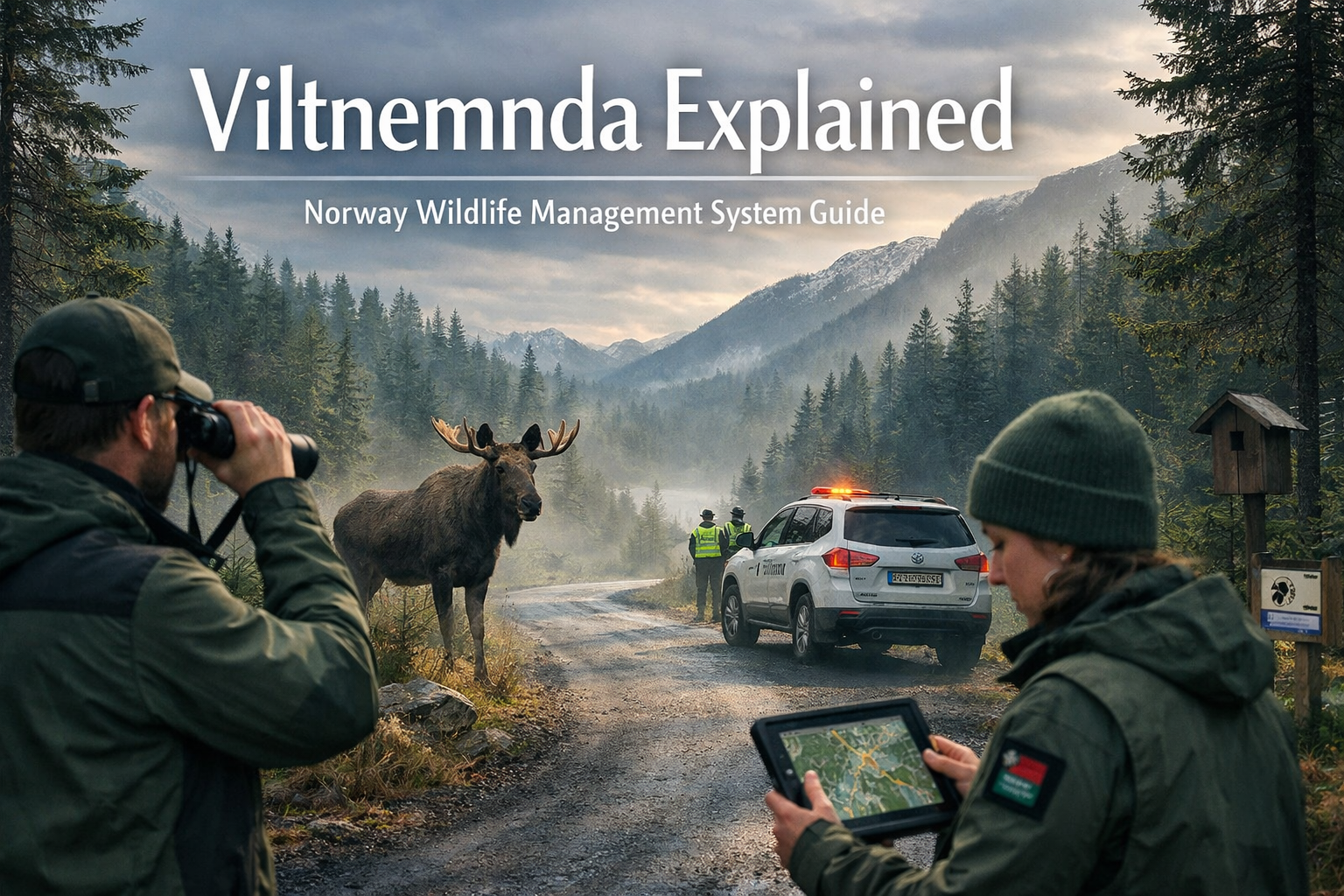
In practical terms, Viltnemnda works as a response-based system that handles wildlife situations whenever they occur. This means the committee does not just plan in advance, but also reacts quickly to real incidents such as injured animals, road accidents, or dangerous wildlife movements near human areas.
One of the most common situations involves collisions between vehicles and wild animals. These incidents are taken very seriously because they can be dangerous for both humans and animals. In such cases, the police are contacted first, and then the wildlife response team is called to the scene to assess the situation and take appropriate action.
The system also plays an important role in long-term planning and environmental monitoring. By collecting data about animal populations, migration patterns, and seasonal behaviour, authorities can make informed decisions about conservation, hunting limits, and ecosystem protection. This ensures that wildlife management is not only reactive but also strategic and forward-thinking.
Wildlife Management and Population Control
One of the most important responsibilities of Viltnemnda is maintaining a healthy balance in wildlife populations. This is especially important for large animals like deer and moose, which can grow rapidly in number if authorities do not carefully monitor and manage their population over time. Proper control is necessary because even small changes in population size can create long-term effects on forests, farmland, and overall ecosystem stability. Without proper management, the natural balance can slowly shift in a way that becomes difficult to fix later.
When animal populations become too large, they can create serious ecological problems, such as overgrazing forests, damaging vegetation, and increasing the number of road accidents involving vehicles. These issues not only affect nature but also directly impact human safety and local agriculture. On the other hand, if populations drop too low, it can disturb biodiversity and weaken the natural balance of the ecosystem, leading to long-term environmental stress.
This is why continuous monitoring and regular field assessments are extremely important in maintaining a stable environment. Wildlife data, seasonal changes, and migration patterns are carefully observed so that any imbalance can be detected early. These observations help authorities understand how animal populations are changing and what actions may be needed in the future.
To handle this situation, controlled hunting is sometimes used as a management tool. These decisions are not random but are based on scientific data, field observations, and long-term environmental studies. This approach ensures that wildlife remains healthy while also reducing risks for human communities and keeping the ecosystem balanced over time.
Road Accidents and Emergency Wildlife Response
Road accidents involving wildlife are a serious issue in Norway due to the fact that roads often pass through natural habitats. Viltnemnda plays a crucial role in responding to these emergencies quickly and effectively to reduce suffering and ensure safety.
When such an accident happens, emergency services are usually contacted first. After that, the wildlife response team is informed and dispatched to the location. Their responsibility is to assess the condition of the animal, secure the area, and take necessary action depending on the situation.
Hunting Regulations and Sustainable Practices
Hunting in Norway is not an uncontrolled activity; it is carefully regulated under the supervision of Viltnemnda. The goal of this system is not to eliminate wildlife but to maintain balance and ensure long-term sustainability of animal populations and ecosystems. Every decision connected to hunting is made with a strong focus on protecting nature while also managing the relationship between humans and wildlife in a responsible way.
Permits for hunting are issued based on detailed population studies, environmental conditions, and seasonal changes. This ensures that only a safe and controlled number of animals are hunted each year, preventing both overpopulation and ecosystem damage. The overall approach treats hunting as part of wildlife management rather than a separate activity. It is seen as a tool that helps maintain ecological balance while supporting responsible and regulated use of natural resources.
Role of Local Communities in Wildlife Management (NEW)
One of the most important but often overlooked parts of Viltnemnda is the involvement of local communities. People who live in rural and forest areas often have direct experience with wildlife daily, which makes their input extremely valuable for decision-making.
Local residents are usually the first to notice changes in animal behaviour, migration patterns, or unusual activity in their surroundings. This real-time information helps authorities respond faster and make better decisions about safety and conservation.
Because of this close connection between people and nature, wildlife management in Norway is not just an administrative system. It becomes a shared responsibility where communities and authorities work together to protect both human life and the environment.
Modern Technology in Wildlife Monitoring (NEW)
In recent years, Viltnemnda has started using modern technology to improve wildlife monitoring and response systems. Tools like GPS tracking, motion cameras, and digital reporting systems are now becoming more common, helping authorities gather more accurate and real-time information about animal movement and behaviour across different regions.
These technologies help track animal movements more accurately and allow authorities to predict potential risks such as road crossings or migration changes. This makes it possible to prevent accidents before they actually happen, instead of reacting after the event. It also improves planning, especially in areas where wildlife frequently interacts with roads or human settlements.
At the same time, technology also requires proper training and coordination. While it improves efficiency, authorities must balance it with traditional field knowledge to ensure decisions remain practical and accurate in real-world conditions. Human experience still plays a key role in interpreting data and making final decisions.
Overall, the combination of modern tools and traditional expertise creates a stronger and more reliable wildlife management system that supports both safety and conservation goals.
Conclusion
The system of Viltnemnda represents a strong and balanced approach to wildlife management in Norway. It combines local knowledge, legal structure, and modern tools to ensure that humans and wildlife can coexist safely. By focusing on sustainability, quick response, and community involvement, it continues to play a key role in protecting both nature and society practically and effectively.
FAQs
What is Viltnemnda in Norway?
Viltnemnda is a local wildlife committee system in Norway that manages wildlife issues such as population control, hunting regulations, and handling injured animals in each municipality.
What does Viltnemnda do when an animal is hit by a car?
Who is responsible for wildlife management in Norway?
Wildlife management in Norway is handled locally by municipalities through Viltnemnda under national laws and environmental guidelines.
Does Viltnemnda control hunting in Norway?
Yes, Viltnemnda helps regulate hunting by issuing permits and deciding hunting limits based on wildlife population data and environmental balance.
Why is Viltnemnda important?
Viltnemnda is important because it maintains balance between humans and wildlife, reduces conflicts, protects ecosystems, and supports sustainable environmental management.