
The way we design websites and digital products has changed a lot over the past few years, and it is still evolving faster than ever. One of the newer ideas gaining attention in modern design conversations is Pxless. At first, the name might sound a bit unusual, but the concept behind it is actually very practical and deeply connected to how users experience digital platforms today.
Pxless is not just a trend or a fancy term that designers use for style. It represents a shift in thinking from fixed, rigid design structures toward more flexible, adaptive, and fluid systems. In simple words, it is about moving away from strict pixel-based layouts and embracing a more scalable way of building digital experiences that can adjust naturally across devices and screen sizes.
What is Pxless in Simple Words
Pxless is a modern design approach where the focus is not on fixed pixel measurements but on flexible and adaptive layouts. Instead of designing everything with exact pixel values, designers think in terms of relative spacing, proportional scaling, and responsive behavior. This means the design adapts smoothly, no matter what screen size or resolution is used.
In traditional design, everything is locked into pixels, which often creates issues when the same layout is viewed on different devices. Pxless removes that limitation by encouraging fluid design systems that respond naturally to the environment they are displayed in. It is more about behavior than rigid structure, which makes it much more suitable for today’s multi-device world.
The idea of Pxless is also closely linked to user experience. When designs are flexible, users get a smoother and more consistent experience across mobile phones, tablets, laptops, and even large screens. Instead of breaking or shrinking awkwardly, the design adjusts itself intelligently, which is exactly what modern users expect without even realizing it.
Why Traditional Pixel Design is Becoming Outdated
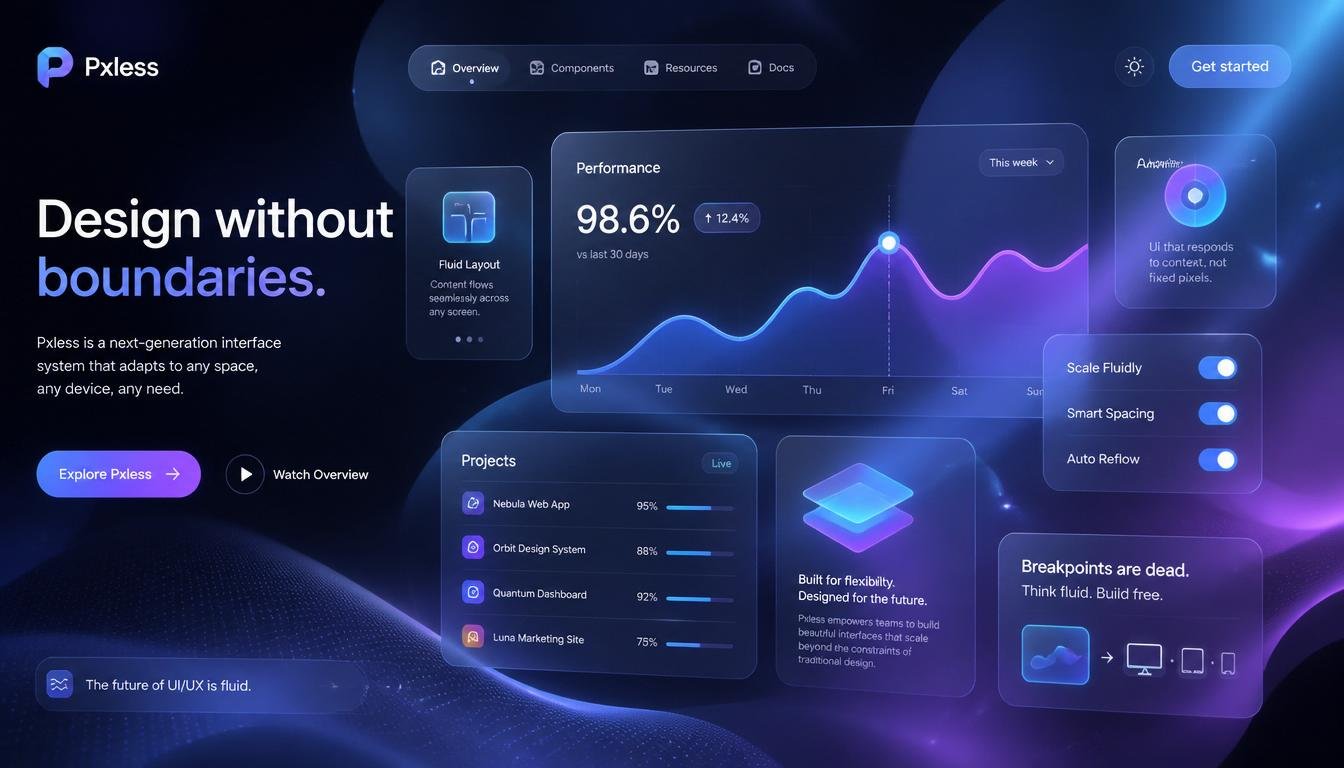
For many years, pixel-based design was the standard. Designers would carefully set every margin, font size, and layout element using fixed pixel values. While this worked well in the early days of the web, it started showing limitations as technology evolved and screen diversity increased.
The biggest problem with pixel-based design is its rigidity. A layout that looks perfect on one screen might appear broken or unbalanced on another. This happens because pixels do not adapt; they stay fixed regardless of the context. As a result, developers often have to create multiple versions of the same design just to make it responsive.
Another issue is maintenance. Managing pixel-heavy designs becomes complicated when updates are needed. A small change in one element can affect the entire layout, especially in complex websites or applications. Over time, this makes development slower and less efficient, which is why many modern teams are looking for better alternatives like Pxless.
The shift toward Pxless is also driven by user expectations. People now use a wide variety of devices, and they expect smooth experiences everywhere. If a website does not adjust properly, users quickly lose interest. This pressure has forced designers to rethink traditional approaches and move toward more flexible systems.
Core Idea Behind Pxless Design Thinking
At the heart of Pxless is the idea of flexibility. Instead of building layouts around fixed values, designers use relative units like percentages, scalable spacing systems, and adaptive grids. This allows elements to grow, shrink, and reposition themselves based on available space.
Another key idea is responsiveness. Pxless is not just about making a website “fit” on different screens, but about making it feel natural on all of them. The layout should not just shrink or expand; it should reorganize itself in a way that maintains balance and usability. This is where modern design systems really shine.
Pxless also introduces a mindset shift. Designers are encouraged to think less about exact measurements and more about relationships between elements. For example, instead of saying a button is exactly 200 pixels wide, they think about how it should behave in relation to surrounding content. This creates more harmony in the overall design structure.
Benefits of Pxless for Modern Websites and Apps
One of the biggest advantages of Pxless is improved adaptability. Websites built with this approach naturally adjust to different screen sizes without requiring separate versions for mobile or desktop. This saves time in development and reduces long-term maintenance efforts.
Another major benefit is better user experience. When a design feels smooth and consistent across devices, users are more likely to stay engaged. Pxless helps eliminate awkward spacing issues, overlapping elements, and broken layouts that often frustrate users on responsive websites.
Performance also improves in many cases because Pxless encourages cleaner and more efficient design structures. Instead of relying on heavy fixed layouts, developers build more streamlined systems that load and render more smoothly. This can indirectly improve loading speed and overall usability.
For teams working on fast-growing products, Pxless also provides scalability. As new features are added, the flexible structure allows easier integration without redesigning the entire interface. This makes it especially valuable for startups and digital platforms that evolve quickly.
Pxless in Real-World Use Cases
In the real world, Pxless is especially useful for startups building modern web applications. Startups often need to move quickly, test ideas, and scale products without constantly redesigning their interface. A Pxless approach allows them to build once and adapt everywhere, which saves both time and resources.
E-commerce platforms also benefit a lot from this design philosophy. Online stores need to display products consistently across mobile and desktop devices. With Pxless, product grids, images, and pricing sections adjust smoothly, creating a better shopping experience for users regardless of the device they are using.
SaaS platforms are another strong example. These platforms often have complex dashboards with charts, tables, and interactive elements. Pxless helps ensure that these components remain readable and usable on different screen sizes without breaking the layout or overwhelming the user.
Even content-based websites like blogs and news platforms gain value from Pxless. Articles, images, and advertisements can adjust naturally without disrupting readability. This creates a more comfortable reading experience and helps keep users engaged for longer periods.
Impact of Pxless on SEO and User Experience
Pxless has a strong connection with SEO because search engines now prioritize user experience more than ever. A website that loads well and adapts smoothly across devices tends to perform better in search rankings. Since Pxless improves responsiveness and usability, it indirectly supports better SEO performance.
User experience is also significantly improved through this approach. When users can navigate a website without zooming, scrolling awkwardly, or dealing with broken layouts, they are more likely to stay longer and interact more. This reduces bounce rates, which is another positive signal for search engines.
Another important factor is accessibility. Pxless design systems often make content more readable and easier to interact with for users with different needs. Whether someone is using a small mobile device or a large desktop monitor, the experience remains consistent and accessible.
Overall, Pxless creates a healthier relationship between design, users, and search engines. Instead of focusing only on visual appearance, it focuses on usability and adaptability, which are now key factors in digital success.
Challenges and Limitations of Pxless
Even though Pxless offers many advantages, it is not without challenges. One of the main difficulties is the learning curve. Designers who are used to pixel-based systems may find it hard to switch their thinking to a more fluid and relative approach. It requires practice and a change in mindset.
Another challenge is consistency control. Because Pxless designs are flexible, ensuring that every element looks exactly as intended across all scenarios can sometimes be difficult. Without proper structure, layouts may become too fluid and lose visual consistency.
There is also the issue of browser and framework compatibility. While modern tools support responsive design well, not all systems handle advanced flexibility equally. This means developers still need to test their designs carefully across different environments.
Despite these challenges, most of them can be managed with proper planning and design systems. As tools and frameworks continue to improve, the limitations of Pxless are gradually becoming easier to overcome.
Future of Pxless and Modern Design Thinking
The future of digital design is clearly moving toward flexibility, adaptability, and user-centered experiences. Pxless fits naturally into this direction because it removes unnecessary restrictions and allows designers to focus on how users actually interact with content.
As technology continues to evolve, devices will become even more diverse in size and resolution. From smartwatches to large interactive displays, the need for adaptable design will only increase. Pxless provides a foundation that can support this growing complexity without requiring constant redesigns.
We are also seeing a shift in design culture. Instead of focusing only on visual precision, designers are now thinking more about systems, behavior, and scalability. Pxless encourages this mindset by promoting design structures that evolve naturally over time.
In the coming years, Pxless-like approaches may become the default standard for web and app design. It is not just a technique, but a new way of thinking about digital experiences in a more flexible and human-centered way.
Conclusion
Pxless represents a powerful shift in how we think about digital design. Instead of relying on rigid pixel-based layouts, it introduces a more flexible, adaptive, and user-focused approach. This makes websites and applications more responsive, scalable, and aligned with modern user expectations. As digital environments continue to grow and diversify, Pxless stands out as a practical and forward-thinking solution for creating better online experiences.