
Jyokyo (状況) is a Japanese word that is usually translated as “situation,” but in its real cultural meaning, it goes far beyond that simple definition. It represents how people understand their surroundings, read emotional atmosphere, and adjust their behavior based on context. In Japanese society, Jyokyo is not just a linguistic term—it is a silent rule that guides how people interact with each other in daily life.
Unlike many Western communication styles, where direct speech is preferred, Jyokyo encourages awareness before expression. It teaches people to observe first, understand the environment, and then respond in a way that maintains balance and harmony. This concept plays a huge role in social behavior, workplace communication, education systems, and even personal relationships in Japan.
In modern times, Jyokyo is gaining attention globally because it reflects emotional intelligence, adaptability, and situational awareness—skills that are essential in today’s fast-changing world.
Understanding the Real Meaning of Jyokyo
Jyokyo does not simply refer to a physical situation. It includes emotional tone, social setting, and hidden expectations within a moment. When Japanese people say “Jyokyo,” they are often referring to the full context of what is happening around them rather than just visible facts.
For example, two people can be in the same meeting, but their understanding of Jyokyo may differ depending on how they interpret silence, tone, and reactions. One person might see agreement, while another might sense hesitation. This deeper reading of situations is what makes Jyokyo such an important part of Japanese thinking.
It is closely connected to awareness of unspoken communication. In many cases, what is not said becomes more important than what is spoken.
Cultural Background Behind Jyokyo
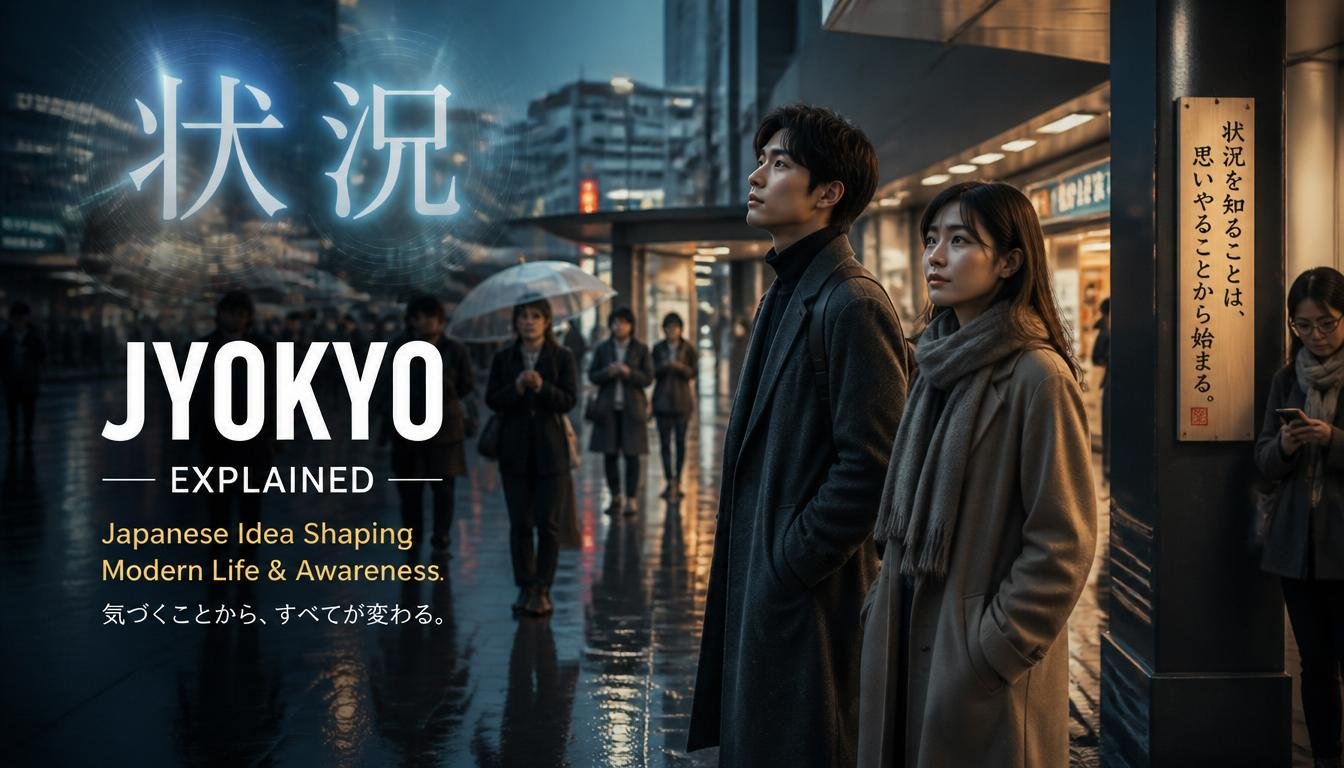
The concept of Jyokyo is deeply connected to Japanese cultural history, where harmony and group balance have always been important values. Traditional Japanese society was built around communities where cooperation was necessary for survival. In such environments, direct confrontation or overly individual expression could disturb harmony.
Over time, people developed a habit of carefully observing their surroundings before speaking or acting. This created a cultural mindset where understanding the situation became more important than expressing personal opinion.
Even today, this mindset continues in modern Japan. Whether in families, schools, or workplaces, people are expected to maintain awareness of Jyokyo so that they do not disrupt group balance.
Jyokyo in Everyday Life
In daily life, Jyokyo is everywhere, even in small actions that may seem normal but carry deeper meaning. For example, when people enter a train in Japan, they naturally lower their voice or remain silent. This is not written as a strict rule, but people follow it because they understand the shared social situation.
Another example is how people behave when someone is upset or quiet in a group. Instead of asking direct questions, they observe and adjust their behavior accordingly. This helps avoid discomfort or emotional pressure.
Jyokyo is also visible in how people wait their turn, avoid unnecessary interruptions, and show respect for shared spaces. These behaviors are not forced but naturally learned through social awareness.
Jyokyo and Communication Style
Communication influenced by Jyokyo is often indirect. Instead of clearly saying yes or no, people may use softer expressions that reflect the situation. This does not mean they are unclear—it means they are considering the emotional impact of their words.
For example, instead of rejecting an idea directly, someone might say, “That could be difficult right now.” This allows the message to be delivered without causing embarrassment or conflict.
In conversations, tone, silence, and timing matter just as much as words. A pause can indicate disagreement, while a smile may signal understanding even without verbal confirmation. This makes communication more layered and dependent on interpretation.
Comparison Between Jyokyo Thinking and Western Thinking
When comparing Jyokyo-based thinking with Western communication styles, one of the most noticeable differences is the approach to expression and clarity. In many Western cultures, direct communication is considered a sign of honesty, transparency, and efficiency. People are encouraged to clearly state their opinions, give straightforward feedback, and openly express disagreement without hesitation. This style is designed to reduce confusion and ensure that messages are understood without needing interpretation.
On the other hand, Jyokyo-based thinking places greater importance on context, harmony, and collective understanding. Instead of focusing on individual expression, it focuses on how the group as a whole will be affected by what is said or done. People are often more careful with their words, choosing indirect expressions that maintain balance and avoid emotional discomfort. The goal is not to hide truth but to deliver it in a way that does not disrupt relationships or create tension.
Because of these differences, misunderstandings can easily occur in global or multicultural environments. For example, a direct “no” in Western communication may be considered normal and efficient, but in Jyokyo culture, the same rejection might be expressed in a softer or indirect way. This can lead to confusion if both sides are not aware of each other’s communication styles.
Despite these differences, both systems have their own strengths. Western communication offers clarity and speed, while Jyokyo-based communication offers emotional sensitivity and harmony. When combined properly, they can create a more balanced and effective global communication style.
Real-Life Situations Where Jyokyo is Visible
Jyokyo is not just a theoretical concept; it is deeply visible in everyday life across Japan. One of the clearest examples can be seen in classrooms, where students often wait for teachers to call on them before speaking. Even if they know the correct answer, they may choose silence until it is appropriate to respond. This behavior is not due to a lack of confidence or knowledge but rather an understanding of classroom order and respect for group structure.
In social gatherings, Jyokyo also plays an important role. People usually take time to observe the mood of the group before actively participating in conversations. They try to understand who is speaking, how others are reacting, and what type of emotional environment is present. Only after reading the situation do they decide how and when to join the discussion.
Public spaces such as trains, parks, and waiting areas also reflect Jyokyo very clearly. People naturally avoid loud conversations, unnecessary noise, or disruptive behavior because they are aware of shared social responsibility. Even without strict enforcement, there is a strong cultural understanding that everyone should respect the collective environment.
These examples show that Jyokyo is not something people consciously think about all the time. Instead, it becomes a natural part of behavior that guides actions in different situations without needing explicit instructions.
Benefits of Understanding Jyokyo
Understanding Jyokyo can significantly improve a person’s emotional intelligence and social awareness. When someone becomes more aware of their surroundings and the emotional tone of a situation, they are able to respond more appropriately and avoid unnecessary misunderstandings. This makes communication smoother and more effective in both personal and professional relationships.
It also helps improve listening skills because Jyokyo encourages people to pay attention not only to words but also to silence, tone, and body language. By learning when to speak and when to remain silent, individuals can create more balanced interactions and reduce the chances of conflict or miscommunication.
In professional environments, Jyokyo awareness becomes even more valuable. Teams that understand context well tend to work more smoothly together because they can adjust their behavior based on group needs. This leads to better cooperation, fewer conflicts, and stronger overall productivity. People who develop this skill often become more adaptable in different social and work environments.
Challenges and Misunderstandings
Despite its many advantages, Jyokyo also comes with certain challenges. One of the main difficulties is that communication is often indirect, which can create confusion for people who are not familiar with this style. Outsiders may find it difficult to understand the true meaning behind silence, hints, or subtle expressions, which can lead to misinterpretation.
Another issue is the tendency to overthink situations. Since Jyokyo relies heavily on reading between the lines, some individuals may try to find hidden meanings in every gesture or silence, even when no deeper meaning exists. This can create unnecessary stress and confusion in communication.
Additionally, there can be social pressure to suppress personal opinions to maintain harmony. While this helps preserve group balance, it may also limit open discussion and make it harder for individuals to express themselves freely. Finding the right balance between harmony and personal expression is one of the ongoing challenges of Jyokyo-based communication.
How to Develop Jyokyo Awareness
Developing Jyokyo awareness is not something that happens instantly; it requires consistent practice, observation, and patience. The first step is learning to slow down reactions and spend more time observing the environment before speaking or acting. By carefully noticing how people behave, respond, and interact, a person can begin to understand the underlying emotional tone of a situation.
Listening is another crucial part of building awareness of Jyokyo. Instead of focusing only on words, it is important to pay attention to tone, pauses, facial expressions, and group dynamics. These subtle signals often carry more meaning than spoken language itself. Over time, this habit helps develop a stronger sense of situational understanding.
As experience grows, individuals naturally become better at reading social context without consciously analyzing every detail. This leads to smoother communication, better decision-making, and improved relationships. Jyokyo awareness ultimately becomes a skill that enhances both personal and professional life in meaningful ways.
Comparison Table
| Situation | Without Jyokyo Awareness | With Jyokyo Awareness |
| Group discussion | Immediate opinion sharing | Observing mood first |
| Conflict | Direct disagreement | Indirect expression |
| Social event | Over-talking | Balanced participation |
| Workplace | Individual focus | Group harmony focus |
Conclusion
Jyokyo is not just a word but a way of understanding life through awareness and context. It teaches that communication is not always about speaking but about observing, interpreting, and responding wisely. In a world where misunderstandings happen easily, Jyokyo offers a reminder that true intelligence often comes from knowing when to speak and when to simply understand the situation.