
Technology is changing the way people work, manage tasks, and organize data. Businesses are now looking for smarter systems that can save time, improve productivity, and reduce manual work. This is where GLDYQL is becoming a topic of discussion across tech communities, startup circles, and productivity-focused platforms. Many people see it as a modern approach to combining artificial intelligence, workflow automation, and smart data handling into one connected system.
The reason GLDYQL is getting attention is simple. Most businesses and individuals struggle with scattered information, repetitive tasks, and inefficient workflows. Teams use different apps for communication, data storage, project management, and analytics, which often creates confusion and slows down operations. GLDYQL introduces a smarter way of managing these processes by bringing automation and intelligent systems together in a more organized environment. It is designed to help people work faster while keeping everything connected and easier to manage.
What Is GLDYQL?
GLDYQL is often described as a modern AI productivity and data automation framework that focuses on improving workflow efficiency. Instead of depending completely on manual processes, it uses automation and smart systems to simplify repetitive tasks and improve decision-making. Many businesses are exploring platforms and frameworks like GLDYQL because they want solutions that can manage data, automate operations, and support growth without increasing workload.
One reason people are interested in GLDYQL is that it combines several important digital trends into one concept. Artificial intelligence, automation, productivity optimization, and data management are all becoming essential in modern work environments. Rather than using separate tools for every task, systems inspired by GLDYQL focus on creating a connected ecosystem where everything works together smoothly.
For example, imagine a small online business handling customer emails, social media scheduling, sales reports, and inventory updates manually every day. This process wastes time and increases the chance of mistakes. A framework like GLDYQL can automate these repetitive actions, allowing the business owner to focus more on growth and customer experience instead of routine tasks.
Why GLDYQL Is Becoming Popular
The digital world moves quickly, and businesses no longer want slow systems that require too much manual work. Companies are now investing in smarter productivity solutions because efficiency directly affects growth and profitability. GLDYQL fits into this growing demand because it represents a more intelligent way of handling daily operations.
Another reason for its popularity is the increasing use of remote work and online collaboration. Teams often work from different locations and depend on digital tools for communication and project management. Without automation, managing these workflows becomes difficult. GLDYQL helps by creating streamlined systems that reduce confusion and improve coordination between departments.
Modern startups especially like concepts such as GLDYQL because startups need fast growth with limited resources. A startup cannot afford to waste hours on repetitive administrative tasks. Automation frameworks help smaller teams achieve more work in less time. This creates better productivity while also reducing operational costs.
People are also becoming more interested in AI-powered tools because artificial intelligence can analyze patterns, predict outcomes, and optimize workflows. Instead of relying only on human effort, businesses can now use smart systems to assist with data analysis, customer engagement, scheduling, and reporting.
The Role of AI in GLDYQL
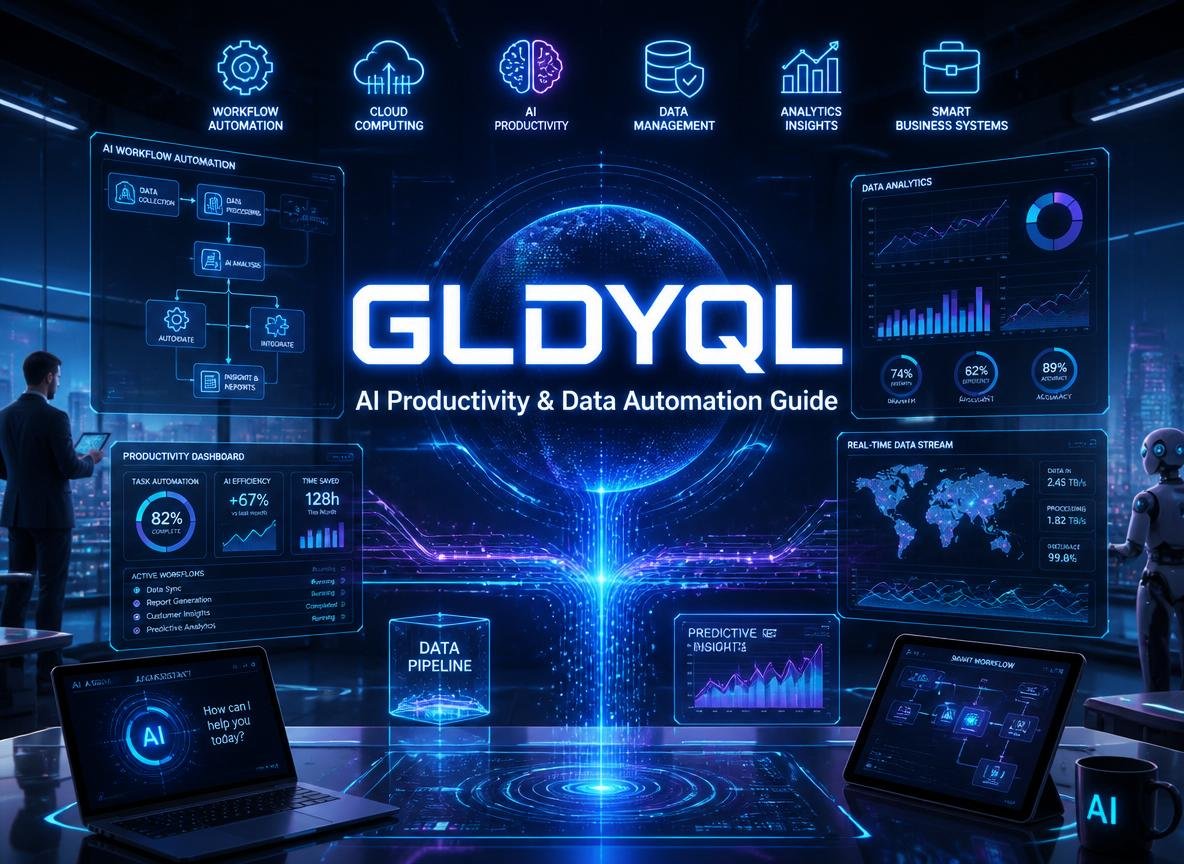
Artificial intelligence is one of the most important parts of GLDYQL. AI allows systems to process information faster, recognize patterns, and make automated suggestions based on collected data. This helps businesses save time and improve accuracy in daily operations.
Traditional productivity systems mainly depend on manual input. Someone has to organize tasks, update reports, and monitor workflows continuously. AI changes this by allowing systems to handle repetitive processes automatically. GLDYQL uses this idea to improve overall efficiency and reduce the workload on employees and business owners.
For example, a customer support team may receive hundreds of emails every day. AI-powered automation can categorize messages, prioritize urgent requests, and even provide instant replies for common questions. This improves customer service while reducing pressure on support staff.
Another example is marketing automation. Businesses can use AI systems to analyze user behavior, schedule content, and track campaign performance automatically. Instead of manually checking every detail, the system provides insights and recommendations based on real-time data.
AI also improves decision-making. Many businesses struggle with analyzing large amounts of information quickly. GLDYQL-style systems can organize data into meaningful reports, helping companies identify trends and make smarter business decisions.
How GLDYQL Improves Productivity
Productivity is no longer just about working harder. Modern productivity focuses on working smarter, and this is where GLDYQL becomes valuable. Automating repetitive tasks and organizing workflows, it allows people to focus on more important activities.
One major productivity problem is multitasking between different platforms. Employees often switch between emails, spreadsheets, communication apps, and project management tools throughout the day. This constant switching reduces focus and wastes time. GLDYQL aims to create more connected systems where information flows automatically between tools.
Imagine a content creation team working on blog articles, social media posts, and analytics reports. Normally, team members may need to manually update project statuses, send reports, and track deadlines. With automation, these tasks happen automatically in the background, allowing the team to concentrate on creativity and strategy.
Another important productivity benefit is reducing human error. Manual processes often lead to mistakes, especially when dealing with large amounts of data. Automated systems improve accuracy by handling repetitive operations consistently.
Time management also improves significantly. Businesses can automate scheduling, reminders, notifications, and reporting tasks. Employees spend less time on routine administration and more time on meaningful work that supports growth and innovation.
Data Automation and Why It Matters
Data is one of the most valuable assets in the digital world. Every business collects information about customers, sales, marketing, operations, and performance. However, managing this data manually can become overwhelming very quickly.
GLDYQL focuses heavily on data automation because businesses need faster and smarter ways to process information. Instead of manually organizing spreadsheets and reports, automated systems collect, sort, and analyze data automatically.
For example, an e-commerce store may receive data from website visitors, customer purchases, social media campaigns, and email marketing platforms. Without automation, managing all this information becomes extremely difficult. A GLDYQL-inspired system can combine these data sources into one dashboard and generate useful insights automatically.
Automation also improves data accuracy. Human error can lead to incorrect reports and poor decision-making. Automated systems reduce these risks by processing information consistently and reliably.
Real-time analytics is another major advantage. Businesses no longer need to wait days for reports. Automated systems can provide live updates about sales performance, customer activity, and operational efficiency. This allows companies to react quickly to changes and opportunities.
GLDYQL for Startups and Small Businesses
Startups often face the challenge of limited resources. They need to grow quickly while managing tight budgets and small teams. This is why automation frameworks like GLDYQL are especially useful for smaller businesses.
Instead of hiring large teams for repetitive administrative work, startups can automate many operations. Tasks like invoice management, customer communication, social media scheduling, and data reporting can be handled automatically.
A startup founder usually manages multiple responsibilities at once. They may handle marketing, sales, operations, and customer support simultaneously. Automation reduces pressure by simplifying routine tasks and improving organization.
GLDYQL also helps startups scale more efficiently. As a business grows, managing workflows manually becomes harder. Automated systems create a foundation that supports expansion without creating operational chaos.
For example, a growing online store may start receiving hundreds of orders daily. Processing orders manually can slow down operations and increase mistakes. Automation systems can manage inventory updates, shipping notifications, and customer confirmations instantly.
Another important benefit is cost efficiency. Hiring additional staff for repetitive tasks can become expensive. Automation allows businesses to achieve more results without dramatically increasing operational costs.
The Future of Workflow Automation
Workflow automation is becoming a major part of modern business strategy. Companies are realizing that manual systems are too slow for today’s digital environment. Automation helps businesses operate faster, smarter, and more efficiently.
GLDYQL represents this shift toward intelligent workflows. Instead of isolated tools and disconnected systems, businesses now want integrated environments where data, communication, and operations work together seamlessly.
One trend shaping the future is predictive automation. AI systems are becoming capable of predicting user behavior and recommending actions before problems appear. This allows businesses to become more proactive rather than reactive.
For example, a smart automation system might detect a drop in customer engagement and automatically suggest marketing improvements. It may also identify workflow bottlenecks and recommend process changes to improve efficiency.
Voice-based automation and conversational AI are also growing rapidly. Many businesses are integrating chatbots and AI assistants into their workflows. These tools help answer customer questions, schedule meetings, and manage tasks automatically.
Another important trend is personalization. Modern users expect personalized experiences, and AI automation makes this possible. Businesses can analyze customer behavior and deliver customized recommendations, emails, and services based on user preferences.
Challenges and Concerns Around GLDYQL
Although automation offers many benefits, there are also challenges businesses must consider. One common concern is data privacy. Automated systems often process large amounts of sensitive information, so companies need strong security measures to protect user data.
Another challenge is system integration. Many businesses already use multiple software tools, and integrating automation frameworks into existing workflows can sometimes become complicated. Proper planning and implementation are necessary to avoid technical issues.
Employee adaptation is another important factor. Some workers worry that automation may replace jobs. In reality, most automation systems are designed to support human productivity rather than eliminate human involvement completely. Businesses still need creativity, strategy, communication, and leadership skills that automation cannot fully replace.
There is also the issue of over-automation. Some companies automate too many processes and lose the human touch in customer interactions. Businesses must balance efficiency with personalization to maintain strong relationships with customers.
Learning curves can also slow adoption. Advanced automation systems may require training and technical understanding before teams can use them effectively. Companies should invest in education and onboarding to maximize the benefits of these systems.
Real-World Examples of AI Productivity Systems
Many businesses already use systems similar to GLDYQL, even if they do not call them by the same name. Productivity and automation tools are becoming common across industries.
Large e-commerce companies use automated inventory systems that update stock levels instantly after purchases. This prevents overselling and improves customer satisfaction. Customer support systems also use AI chatbots to answer common questions quickly.
Marketing agencies use automation to schedule social media posts, manage email campaigns, and track analytics. Instead of manually handling every task, automated workflows save time and improve campaign performance.
Financial companies rely heavily on automated reporting systems. AI tools can analyze spending patterns, detect unusual activity, and generate financial reports within seconds. This improves decision-making and reduces manual workload.
Healthcare organizations are also adopting automation for appointment scheduling, patient communication, and data management. Automated systems reduce paperwork and improve operational efficiency.
Even content creators and freelancers benefit from automation. Writers, designers, and creators use productivity systems to manage projects, organize deadlines, and automate repetitive administrative tasks.
How GLDYQL Can Shape Digital Transformation
Digital transformation is no longer optional for modern businesses. Companies that fail to adapt to automation and AI risk falling behind competitors. GLDYQL represents the broader movement toward smarter digital operations.
Businesses now want systems that can connect communication, analytics, customer management, and workflow automation in one place. This creates a more organized and efficient working environment.
One major advantage of digital transformation is scalability. Automated systems can handle increasing workloads without requiring the same level of manual effort. This allows businesses to grow more smoothly.
Customer experience also improves significantly. Faster response times, personalized interactions, and better organization create stronger customer satisfaction. Businesses can respond to user needs more effectively through intelligent automation.
Innovation becomes easier as well. When teams spend less time on repetitive work, they have more energy for creativity, strategy, and product development. Automation supports innovation by freeing people from routine tasks.
Digital transformation also improves collaboration. Teams can access shared information, track project progress, and communicate more efficiently through connected systems.
Is GLDYQL the Future of Smart Work?
Many experts believe automation and AI productivity systems will become essential in almost every industry. Businesses are under pressure to operate faster while maintaining high quality and strong customer experiences. Systems like GLDYQL help achieve these goals by combining automation, intelligence, and efficiency.
The growing popularity of remote work, digital business models, and online collaboration tools also supports the rise of smart productivity frameworks. Companies want flexible systems that can adapt to changing work environments.
Another reason GLDYQL has future potential is that data continues to grow rapidly. Businesses generate massive amounts of information every day, and manual processing is no longer practical. Intelligent automation helps companies organize and understand this information more effectively.
Consumers are also becoming more comfortable with AI-powered services. From recommendation systems to virtual assistants, automation is now part of everyday digital experiences. This creates more acceptance for AI-driven productivity solutions.
As technology continues to evolve, productivity frameworks will likely become even smarter. Future systems may include deeper AI integration, advanced predictive analytics, and more personalized automation experiences.
Conclusion
GLDYQL represents a modern approach to AI productivity and data automation that aligns with the needs of today’s digital world. Businesses and individuals are searching for smarter ways to manage workflows, organize information, and improve efficiency without increasing complexity. By combining automation, artificial intelligence, and connected systems, GLDYQL offers a vision of how modern productivity can evolve. Whether for startups, growing businesses, or individual creators, the idea behind GLDYQL highlights the growing importance of intelligent workflows in shaping the future of work and digital transformation.
FAQs
What is GLDYQL?
GLDYQL is a modern AI productivity and data automation framework designed to improve workflow efficiency, automate repetitive tasks, and simplify data management for businesses and individuals.
How does GLDYQL improve productivity?
GLDYQL improves productivity by automating routine processes such as reporting, scheduling, communication, and data organization. This allows users to focus more on important tasks instead of manual work.
Is GLDYQL useful for small businesses?
Yes, GLDYQL is highly useful for startups and small businesses because it helps reduce operational workload, saves time, and improves workflow management without requiring large teams.
Can GLDYQL help with data management?
GLDYQL supports smart data automation by organizing, analyzing, and processing information more efficiently. It helps businesses manage large amounts of data with better accuracy and faster insights.
Why is GLDYQL becoming popular in the tech world?
GLDYQL is becoming popular because businesses are increasingly adopting AI-powered automation systems to improve efficiency, reduce manual tasks, and create smarter digital workflows.