
Why Did Delta Flight DL275 Divert to LAX?
Air travelers often expect long-haul international flights to follow a predictable schedule, especially when flying with a major carrier like Delta Air Lines. That is why the recent incident involving delta flight dl275 diverted lax quickly, gained attention online. Passengers, aviation enthusiasts, and frequent travelers all wanted answers after the Airbus A350 unexpectedly changed course and landed in Los Angeles instead of continuing toward Tokyo.
Flight diversions are more common than many people realize, but every incident has its own story. In the case of Delta Flight DL275, reports pointed toward a technical issue that forced the crew to make a precautionary decision. While no injuries were reported, the diversion raised important questions about airline safety procedures, aircraft maintenance, and how airlines handle unexpected situations in the air.
This article breaks down exactly what happened, why the aircraft diverted to Los Angeles, how passengers were affected, and what travelers can learn from incidents like this.
What Happened to Delta Flight DL275?
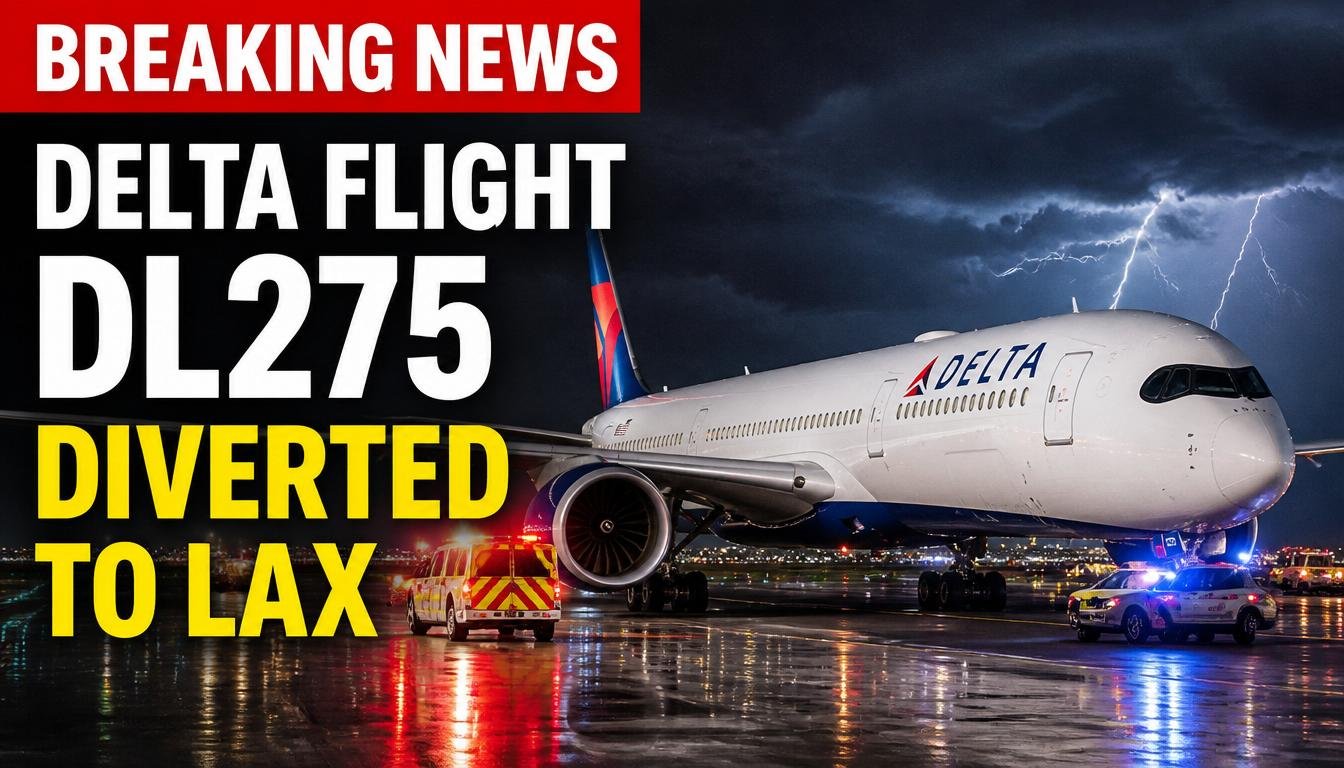
Delta Flight DL275 was operating a scheduled international route from Detroit Metropolitan Wayne County Airport to Tokyo Haneda Airport. Several hours into the journey, the aircraft reportedly experienced a technical concern connected to one of its onboard systems.
Instead of continuing across the Pacific Ocean, the flight crew decided to divert the aircraft to Los Angeles International Airport (LAX). The aircraft landed safely, and passengers were later assisted with accommodations and alternative travel arrangements.
The incident quickly spread across aviation forums, flight tracking websites, and social media platforms because the aircraft had already traveled for several hours before turning toward Los Angeles.
For many travelers, the biggest surprise was not the diversion itself but the distance already covered before the decision was made.
Flight Route and Aircraft Information
Here is a quick overview of the flight involved in the incident:
| Flight Detail | Information |
| Airline | Delta Air Lines |
| Flight Number | DL275 |
| Route | Detroit to Tokyo Haneda |
| Diversion Airport | Los Angeles International Airport |
| Aircraft Type | Airbus A350 |
| Flight Category | Long-haul International |
The Airbus A350 is considered one of the most advanced and reliable aircraft currently operating. It includes advanced monitoring systems capable of detecting technical abnormalities early, which helps crews make informed safety decisions before a situation becomes serious.
Why the Flight Diverted to LAX
According to reports circulating within aviation tracking communities, the likely cause involved an issue related to the aircraft’s anti-ice system. While Delta did not immediately release every technical detail publicly, aviation experts explained that these systems are extremely important during long-haul operations.
Aircraft anti-ice systems prevent dangerous ice accumulation on critical surfaces and engine components. Even a suspected malfunction can trigger a diversion because safety regulations prioritize prevention over risk-taking.
There are several reasons Los Angeles was likely chosen:
Major Maintenance Facilities
LAX has extensive maintenance capabilities for widebody aircraft like the Airbus A350. Delta has operational support there, making inspections faster and more efficient.
Passenger Support Infrastructure
A major international airport can handle hundreds of unexpected passengers more easily than smaller airports.
Safer Operational Planning
Crossing the Pacific Ocean with a potential system issue creates additional operational risk. Diverting before reaching remote oceanic airspace is considered safer.
This type of decision may frustrate travelers temporarily, but aviation experts generally see it as a sign that airline safety systems are working properly.
Timeline of the Incident
Departure From Detroit
The flight departed normally from Detroit Metropolitan Airport and initially continued along its scheduled transpacific route toward Tokyo, Japan. According to available flight tracking information, everything appeared routine during the early stages of the journey, with no immediate signs of operational trouble reported by passengers or crew members onboard.
Mid-Flight Technical Concern
Several hours into the flight, onboard monitoring systems reportedly detected a technical abnormality that required further evaluation. While the exact issue was not immediately disclosed publicly, aviation experts suggested that the concern may have involved an important aircraft system that could not be ignored during a long-haul flight across the Pacific Ocean.
Crew Assessment
After the warning appeared, the pilots coordinated closely with Delta’s operational control center and maintenance specialists on the ground. Modern aircraft continuously transmit technical data in real time, allowing airline engineers to help crews assess whether the aircraft can safely continue or if a diversion becomes the safer option.
Diversion Decision
Following a detailed safety assessment, the flight crew determined that continuing toward Tokyo was not the best operational decision under the circumstances. Instead, they redirected the aircraft toward Los Angeles International Airport (LAX), where Delta had better maintenance support, passenger assistance facilities, and operational resources available for handling the situation efficiently.
Safe Landing at LAX
The aircraft ultimately landed safely at LAX without injuries, panic, or signs of a severe onboard emergency. Emergency procedures were handled professionally, and passengers were later assisted with rebooking, accommodations, and further travel arrangements while the aircraft underwent technical inspection.
How Airlines Decide to Divert Flights
Many passengers assume diversions happen only during emergencies, but that is not always true. Modern airlines often divert flights as a precaution long before a situation becomes dangerous.
Airline crews consider several factors:
- Aircraft system warnings
- Weather conditions
- Distance from maintenance facilities
- Fuel requirements
- Availability of emergency services
- Passenger safety
- International airspace limitations
For long-haul international flights, decisions become even more important because aircraft may spend hours far away from major airports.
That is one reason aviation experts supported the handling of the delta flight dl275 diverted lax incident.
Passenger Experience During the Diversion
Passengers on diverted flights often experience confusion first because crews usually avoid causing panic while technical evaluations are ongoing.
Based on reports from travelers in similar situations, passengers likely experienced:
- Extended flight duration
- Delayed arrival plans
- Rebooking complications
- Hotel accommodations
- Immigration processing delays
- Missed connections
However, most travelers also recognize that safety comes before schedule convenience.
One experienced frequent flyer commented online that diversions are frustrating financially and emotionally, but they are preferable to crews ignoring warning systems.
Safety Protocols Followed by Delta
Major international airlines like Delta Air Lines follow strict safety procedures whenever technical issues appear during a flight. Modern aircraft continuously send diagnostic information to airline maintenance centers, allowing engineers to monitor aircraft systems in real time. During the delta flight dl275 diverted lax incident, these monitoring systems likely helped crews detect the abnormality early and assess the situation carefully. This preventive approach is considered one of the most important reasons commercial aviation remains highly reliable and safe for international travelers worldwide today.
Pilots also coordinate closely with ground engineers and operational control teams during abnormal situations. Maintenance specialists review technical data transmitted from the aircraft and help determine whether the flight can continue safely or requires diversion. For long-haul international routes crossing oceanic regions, this coordination becomes extremely important because alternative airports may be limited once the aircraft travels farther from the mainland or major airline support facilities during flight operations.
After the aircraft safely landed at Los Angeles International Airport, Delta reportedly assisted passengers with rebooking, accommodations, and updated travel arrangements. These passenger protection procedures are standard among major global airlines and help reduce stress during unexpected disruptions. Although diversions can create delays and inconvenience for travelers, aviation experts consistently view precautionary decisions like this as evidence that airline safety systems are functioning exactly as intended.
Comparison: Diversion vs Emergency Landing
Many news headlines use dramatic wording, but not every diversion qualifies as an emergency landing.
| Diversion | Emergency Landing |
| Often precautionary | Usually immediate danger |
| Controlled operational decision | Urgent response required |
| May involve technical inspections | Often involves critical failures |
| The passenger’s calm was usually maintained | Emergency crews are typically activated |
| Common in aviation | Less common |
In the case of DL275, reports suggested this was a precautionary diversion rather than a severe onboard emergency.
Common Causes of Long-Haul Flight Diversions
The delta flight dl275 diverted lax incident highlights how many operational, technical, and safety-related factors can force international aircraft to unexpectedly change routes during long-haul journeys. Airlines constantly monitor aircraft systems, passenger safety conditions, weather activity, and flight operations to ensure every journey remains as safe and efficient as possible. Even a small issue during a transpacific flight can lead to precautionary diversions if crews believe continuing the route could increase operational risk later in the journey.
Technical System Warnings
Modern aircraft continuously monitor thousands of onboard systems, including engines, electrical components, hydraulics, navigation systems, and anti-ice equipment. If an abnormal warning appears, pilots and maintenance teams immediately evaluate whether the aircraft can safely continue operating over long international distances.
Medical Emergencies
Passengers or crew members sometimes experience sudden medical emergencies during flights, including heart problems, breathing difficulties, or severe allergic reactions. In serious cases, pilots may divert to the nearest suitable airport so emergency medical teams can provide urgent treatment immediately after landing.
Weather Problems
Severe turbulence, thunderstorms, strong crosswinds, volcanic ash clouds, or dangerous weather systems can create unsafe flying conditions for aircraft. Pilots occasionally change routes or divert flights entirely to avoid weather hazards that could affect passenger safety or aircraft performance during long-haul operations.
Fuel Management Issues
Unexpected route changes, strong headwinds, airport congestion, or weather diversions can impact fuel planning during international flights. Airlines carefully calculate fuel reserves, and pilots may divert if remaining fuel margins no longer meet strict aviation safety requirements for continuing the planned journey safely.
Security Concerns
Although rare, security threats or suspicious onboard situations can sometimes force aircraft to divert unexpectedly. Airlines and aviation authorities treat all potential security concerns seriously, even when later investigations determine the situation was not an immediate danger to passengers or crew members onboard.
Crew Duty Time Limits
International aviation regulations strictly limit how long pilots and cabin crews can work continuously during flights. Delays, diversions, or unexpected operational disruptions may cause crews to approach legal duty time restrictions, forcing airlines to divert or delay flights until replacement crew members become available.
Aviation Experts’ View on the Incident
Aviation professionals generally evaluate incidents differently than social media users.
Online discussions often focus on fear or speculation, while experts focus on procedures and outcomes.
From a professional standpoint, the safe landing itself is considered evidence that the system worked correctly.
Industry analysts noted several positive points:
- Early detection of the issue
- Controlled operational response
- Successful diversion planning
- Safe landing without injuries
- Passenger protection measures
Modern aviation operates on a prevention-first philosophy. Airlines prefer caution rather than pushing aircraft beyond acceptable risk thresholds.
Pros and Cons of Precautionary Diversions
| Pros | Cons |
| Improves passenger safety | Travel delays |
| Prevents larger emergencies | Extra airline costs |
| Allows immediate inspection | Passenger frustration |
| Reduces operational risk | Missed connections |
| Protects aircraft systems | Scheduling disruptions |
While inconvenient, precautionary diversions are generally viewed as responsible aviation practice.
What Passengers Should Do During Diversions
Flight diversions can feel stressful and confusing, especially during long international journeys like the delta flight dl275 diverted lax situation. However, most diversions are precautionary decisions made for safety, not signs of danger. The most important thing passengers should do is stay calm, follow crew instructions, and understand that airline teams are trained to handle these situations professionally. Panic or confusion usually makes the experience more difficult than it actually is.
Passengers should also closely monitor official airline notifications instead of relying on rumors or social media posts. Airlines provide real-time updates through mobile apps, SMS alerts, and airport announcements regarding rebooking, hotel arrangements, and baggage instructions. Keeping your phone charged and checking updates regularly ensures you don’t miss important travel information, especially when schedules change suddenly after a diversion.
It is also very important to keep essential items easily accessible in your carry-on bag. Things like travel documents, medication, phone chargers, and basic toiletries can make a big difference if you are delayed overnight or waiting for a replacement flight. Diversions often lead to unexpected waiting times, so having necessities within reach helps you stay comfortable and reduces stress during the disruption.
Finally, passengers should avoid spreading unverified information and instead wait for official updates from the airline or aviation authorities. Social media speculation during incidents can be misleading and often creates unnecessary panic. Staying patient, cooperative, and informed ensures a smoother experience and helps airline staff manage the situation more efficiently for all passengers onboard.
Mistakes Travelers Should Avoid
During flight diversions like the delta flight dl275 diverted lax situation, one of the biggest mistakes passengers make is panicking or assuming the worst before getting official information. Diversions are usually precautionary safety decisions, not emergencies, but emotional reactions can quickly spread stress inside the cabin. Staying calm and listening to the cabin crew helps avoid confusion and ensures you respond correctly to instructions instead of relying on rumors or assumptions.
Another common mistake is ignoring official airline communication and depending only on social media updates. Platforms like Twitter or Facebook often circulate incomplete or incorrect information during aviation incidents, which can lead to misunderstanding the actual situation. Airlines provide real-time updates through apps, SMS, and airport staff, and these are always the most reliable sources for accurate details about rebooking, hotels, and baggage handling.
Many travelers also forget to prepare for delays by keeping essential items in checked luggage instead of carry-on bags. This becomes a problem during unexpected diversions when passengers may need overnight stays or long waiting periods at airports. Important items like medications, chargers, travel documents, and basic toiletries should always stay accessible. Being prepared helps reduce stress and makes it easier to handle sudden travel changes smoothly and comfortably.
Latest Updates About DL275
Recent aviation tracking reports indicate the aircraft landed safely in Los Angeles and underwent a detailed technical evaluation after arrival. Maintenance teams carefully inspected the aircraft systems to identify the exact cause of the in-flight warning and ensure it was fully safe for future operations before returning to service. This kind of inspection is standard procedure after any long-haul diversion involving technical alerts.
Passengers were later rebooked or accommodated based on available flight schedules, with airlines providing support such as hotel arrangements, meal assistance, and alternative travel options where needed. No injuries were reported during the diversion, and cabin crew managed the situation professionally, keeping passengers informed throughout the process to reduce confusion and stress during the unexpected change in route.
At the time of writing, no evidence suggested a life-threatening onboard emergency occurred. Most available information points toward a precautionary technical response, which is common in modern aviation when even minor system irregularities are detected early. These proactive decisions are designed to prioritize safety over schedule pressure, ensuring aircraft are thoroughly checked before continuing long international operations.
As additional verified updates emerge from airline statements or aviation authorities, more technical details may become public. Aviation investigations typically take time because engineers review flight data, system logs, and maintenance records carefully to determine the root cause and confirm that all safety systems functioned as intended during the flight.
Conclusion
The delta flight dl275 diverted lax incident highlights how modern aviation safety systems are designed to prioritize passenger protection above everything else. While the unexpected diversion caused delays and frustration for travelers, the crew’s decision to land safely at LAX demonstrated the importance of precautionary action during long-haul international flights. From advanced aircraft monitoring systems to rapid coordination between pilots and ground engineers, this event showed how airlines handle technical concerns before they become serious problems. For passengers, it also serves as a reminder that diversions are often a sign of strong safety protocols working exactly as intended.
FAQs
Why did Delta Flight DL275 divert to LAX?
The flight reportedly diverted because of a technical concern involving onboard systems, possibly connected to the anti-ice system.
Was Delta Flight DL275 an emergency landing?
Available reports suggest it was a precautionary diversion rather than a severe emergency landing.
Were passengers injured during the diversion?
No injuries were reported after the aircraft landed safely in Los Angeles.
What aircraft operated DL275?
The route was operated using an Airbus A350 widebody aircraft.
Why choose LAX for the diversion?
Los Angeles offers major maintenance facilities, operational support, and passenger handling capacity for international flights.
Are flight diversions common?
Yes. Airlines divert flights more often than many travelers realize, especially when technical inspections are needed.